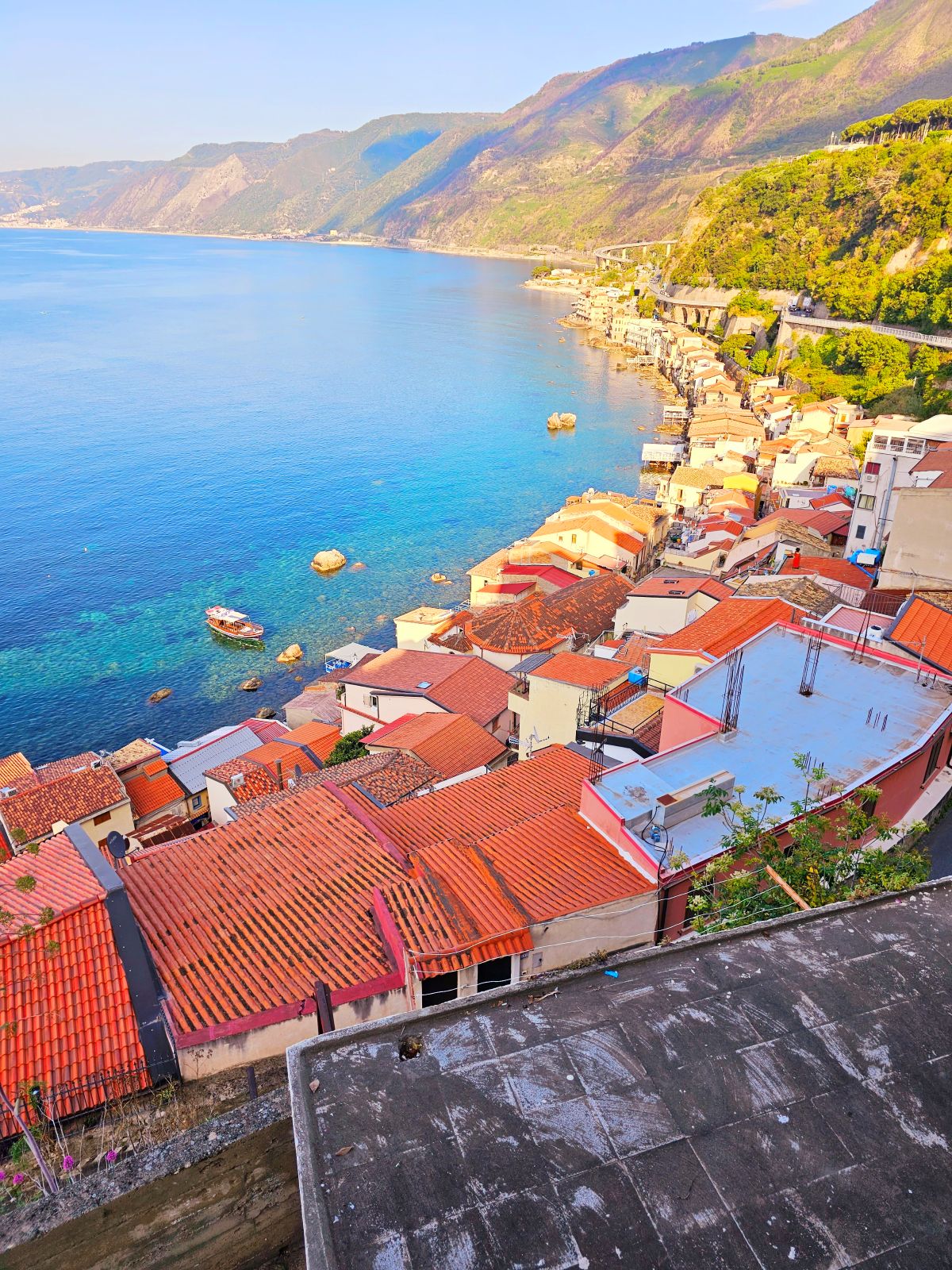
Looking for the best things to do in Scilla, Italy? This beautiful little fishing town in Calabria is somewhere I completely fell in love with during my solo trip around southern Italy.
With colorful houses sitting right against the water, a historic castle overlooking the coastline and some of the prettiest views I’ve seen in Italy, Scilla is a wonderful place to visit.
But I’ll be honest. There aren’t actually that many things to do in Scilla, and I think that’s part of its charm.
It’s not somewhere you visit for endless attractions or a packed sightseeing itinerary. Instead, it’s a place to wander through beautiful little streets, spend time by the sea, enjoy long lunches and watch the sunset with a glass of wine.
I spent two nights in Scilla during a four-day solo trip around Calabria, traveling entirely by public transport. I stayed in an apartment overlooking Ruffo Castle and spent my time exploring Chianalea, the beach and the upper part of town.
In this guide, I’ll share seven of the best things to do in Scilla, including my favorite viewpoints, places to explore and a boat trip I’d love to try if I returned.
I’ll also cover some fantastic day trips you can take from Scilla, including Tropea, Messina and Taormina, all three of which I’ve personally visited.

Affiliate disclosure: This article contains affiliate links. If you book through one of these links, I may earn a small commission at no additional cost to you. The photographs of Scilla are from my own travels, except for the boat tour promotional image.
Things to Do in Scilla at a Glance
Scilla is a small coastal town, so you can comfortably enjoy its main attractions without rushing around. These are the seven experiences I’d recommend.
- Explore Chianalea: Wander through the historic fishing village with its colorful houses and little cobbled streets.
- Visit Ruffo Castle: Discover the historic fortress overlooking the sea.
- Relax at Marina Grande: Enjoy the beach, swim in the sea or find a beachfront bar.
- Visit Piazza San Rocco: Take the public lift to one of the most beautiful viewpoints in Scilla.
- Eat beside the water: Enjoy the waterfront restaurants and traditional Calabrian food.
- Take a transparent boat tour: Explore the Costa Viola coastline and see beneath the water.
- Watch the sunset: Enjoy the evening colors over the Strait of Messina.
1. Explore Chianalea, the Fishing Village
If there’s one thing you absolutely must do in Scilla, it’s spend time exploring Chianalea.
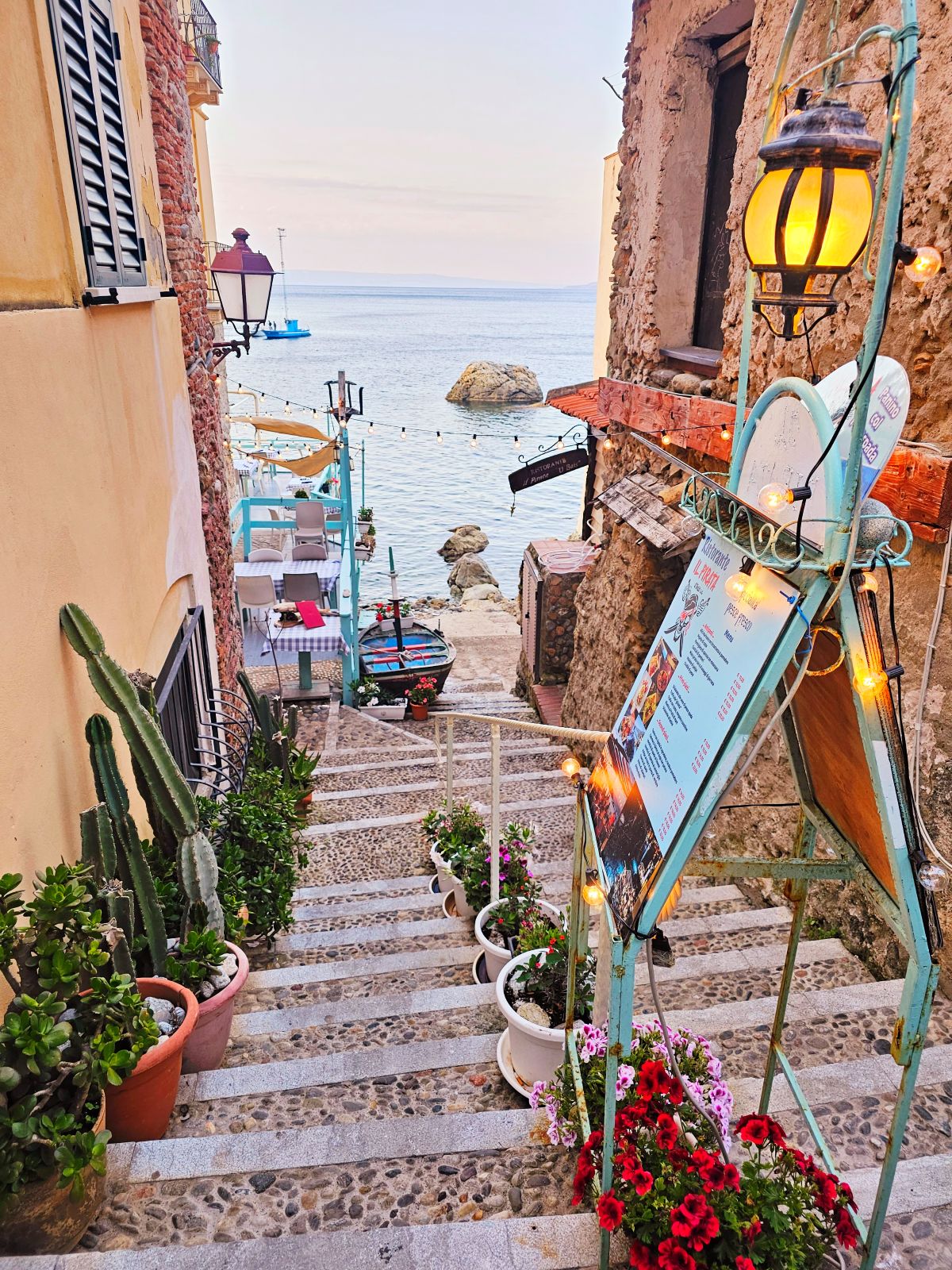
Chianalea is the historic fishing district and is often referred to as the Little Venice of Calabria. It’s made up of beautiful old houses, narrow cobbled streets and tiny alleyways that lead straight down to the sea.
Some of the buildings sit right against the water, and you’ll find little fishing boats tucked between the houses.
I absolutely loved wandering around this part of Scilla. Every time I turned a corner, there seemed to be another lovely little street or beautiful view to photograph.

One of my favorite things about Chianalea was how peaceful it felt compared with some of the more famous Italian coastal towns I’ve visited.
There aren’t rows of souvenir shops or huge attractions here. Instead, you’ll find traditional houses, small restaurants and fishing boats beside the water.
I visited in May, when it was lovely to explore without the crowds you might expect during the main summer season.

It’s also worth paying attention to the smaller details. Some of my favorite photographs weren’t necessarily of the famous views, but of little corners and decorations I’d spotted while wandering around.

I’d recommend spending at least an hour wandering through Chianalea, although it’s the sort of place where you can easily lose track of time taking photographs and admiring the scenery.
It’s particularly beautiful later in the day when the light starts changing over the water.
2. Visit Ruffo Castle (Castello Ruffo di Scilla)
One of the most recognizable landmarks in Scilla is Ruffo Castle, the impressive historic fortress perched on the rocky headland between Chianalea and Marina Grande beach.
You’ll see the castle from all over Scilla, and it was one of the main reasons I fell in love with the town when I was researching my trip.
I actually chose my accommodation because it had a huge balcony overlooking the castle. Waking up to those views every morning was one of the highlights of my stay.

The castle has a long history and occupies a strategic position overlooking the Strait of Messina. The building has been changed and extended over the centuries, and today it’s one of the town’s main historic attractions.
Although I spent plenty of time admiring and photographing the castle, I didn’t actually go inside during my visit.
However, you can visit the fortress, which has historic rooms, courtyards and views over the surrounding coastline.
Admission was advertised at approximately €3 per adult when I researched this guide, although prices and opening hours can change. I’d recommend checking before visiting, particularly outside the main summer season.
Check the official Ruffo Castle visitor information here.
3. Spend Time at Marina Grande Beach
Marina Grande is Scilla’s main beach, and it’s absolutely beautiful.
The beach stretches along the coastline beneath the upper town, with Ruffo Castle rising above the rocks at one end and the mountains providing a gorgeous backdrop.
There are beach clubs, restaurants and bars along the seafront, as well as areas where you can simply find a spot and relax.

I visited during May, when the beach wasn’t particularly busy, and loved being able to sit and enjoy the scenery without the crowds.
The water looked beautiful, and during the warmer summer months this would be a lovely place to spend a few hours swimming and relaxing.
I actually spent part of my first evening at a beachfront bar rather than heading straight back to my apartment. The view towards Ruffo Castle was just too good to leave.

If you’re staying in Scilla overnight, I’d definitely recommend making time to sit at one of the beachfront bars, even if you’re not planning a full beach day.
Marina Grande is also conveniently located near Scilla train station, making it a good first stop if you’re arriving by public transport.
4. Take the Lift to Piazza San Rocco for Incredible Views
One of my favorite places in Scilla was Piazza San Rocco, a beautiful panoramic square in the upper part of town.
From here, you get incredible views over Ruffo Castle, Marina Grande beach and the Strait of Messina.
I visited this viewpoint several times during my stay because my apartment was located in the upper part of Scilla.
And one of the best things about visiting Piazza San Rocco is that you don’t necessarily have to tackle the steep walk uphill.
How to Get to Piazza San Rocco Using the Public Lift
Scilla has a public lift connecting the area near Marina Grande beach to the upper town.
When I visited, it cost just €1, and I could pay by card or cash. The lift made getting around Scilla much easier, particularly when I first arrived with my backpack.

From Scilla train station, it took me less than 10 minutes to walk to the lift. Once at the top, you’re in the upper part of town, where it’s easy to explore the viewpoint and nearby streets.
I’d definitely recommend taking the lift up, enjoying the views and then exploring the surrounding area on foot.
However, there’s one important thing to know about the lift.
Check the operating hours!
When I visited in May, the lift closed earlier in the evening than I expected. This was particularly inconvenient because my apartment was in the upper town, and taxis weren’t easy to find.
If you’re planning to stay out for dinner and return to upper Scilla later, don’t assume the lift will still be running.
Visit Piazza San Rocco After Dark
Although the views are lovely during the day, I think Piazza San Rocco is particularly beautiful as the sun goes down.
I managed to capture one of my favorite photographs of the trip from here, looking out over Ruffo Castle and the beach as the lights started coming on around the town.

It’s such a lovely place to stop for a while and enjoy the scenery.
And best of all, you don’t have to pay to enjoy the viewpoint itself.
5. Enjoy Dinner at a Waterfront Restaurant
One of the best things about visiting Scilla is being able to enjoy dinner beside the sea.
Chianalea is particularly beautiful in the evening, with little restaurants tucked between the historic houses and terraces extending out towards the water.
Scilla is famous for swordfish, which is a traditional part of the local cuisine. You’ll see it featured on plenty of menus around the town.
However, I have to admit something. I’m really not much of a seafood person!
During my stay, I actually found it a little difficult to decide where to eat because so many of the restaurants specialized in seafood.
I eventually found somewhere in Chianalea serving pizza, which suited me perfectly, and enjoyed a relaxed dinner with some wine.

One of the most photogenic restaurants in Chianalea is Il Pirata, with its beautiful waterfront terrace.
I particularly loved the view of the restaurant sitting beside the sea, with the traditional buildings of Chianalea behind it.

Even if you’re not a seafood lover like me, I’d definitely recommend having dinner in Chianalea at least once during your visit.
It’s not just about the food. Sitting outside with a glass of wine, watching the water and enjoying the atmosphere is a big part of what makes Scilla special.
Both of my evening meals in Scilla cost around £30 including wine, which I thought was reasonable for the lovely settings.
6. Take a Transparent Boat Tour Along the Costa Viola
One experience I’d love to try if I returned to Scilla is a boat trip along the beautiful Costa Viola coastline.
There are boat tours departing from Scilla, including a particularly interesting experience aboard a transparent boat called the Clear Boat Explorer.
Unlike a traditional sightseeing boat, its transparent design allows passengers to look through the boat and see the water and seabed beneath them.

The coastline around Scilla is known for its clear water and beautiful scenery, so I think this would be a lovely way to experience the area from a completely different perspective.
Depending on the tour, you may explore sections of the coastline around Chianalea, Marina Grande or Favazzina, with opportunities to enjoy the sea along the way.
This isn’t an activity I managed to fit into my own trip, but it’s something I’d seriously consider booking next time, particularly if I was visiting with my family.
I’d recommend checking the exact itinerary, duration and whether swimming stops are included before booking, as different boat experiences are available.
My tip: This would be a lovely experience to book during the warmer months when the weather and sea conditions are suitable. Boat tours may be weather dependent, so keep a little flexibility in your plans.
View the Transparent Boat Tour
7. Watch the Sunset Over the Strait of Messina
If you’re staying in Scilla overnight, one of my biggest recommendations is to make time to enjoy the sunset.
Scilla sits on the Costa Viola, a beautiful stretch of coastline overlooking the Strait of Messina, and the colors in the evening can be incredible.
I spent my first evening down near Marina Grande, enjoying a drink at a beachfront bar with views towards Ruffo Castle.
As the sun started going down, the light changed across the beach, the castle and the surrounding coastline.

It’s one of those experiences that doesn’t cost anything, but it’s something I’ll always remember about my trip.
I’d recommend either finding a beachfront bar in Marina Grande or heading to Piazza San Rocco for the panoramic views over the town.
And if you’re lucky enough to have a balcony overlooking the castle, that’s another lovely place to watch the evening light.
For me, sitting with a glass of wine and enjoying the scenery was one of the nicest parts of staying in Scilla.
How Many Days Do You Need in Scilla?
I spent two nights in Scilla, which gave me plenty of time to explore the town without rushing.
However, having now visited, I think you could comfortably see Scilla’s main attractions in one day.
If you’re just visiting for the day, I’d recommend spending time exploring Chianalea, visiting Marina Grande beach, admiring Ruffo Castle and heading up to Piazza San Rocco for the views.
You could also enjoy lunch at one of the waterfront restaurants before catching a train onwards.
Personally, though, I think Scilla is worth staying in overnight if you have the time.
The town has a lovely atmosphere in the evening, and I really enjoyed being able to sit by the water without having to worry about catching a train straight afterwards.
If I was repeating my Calabria itinerary, I would probably spend one night in Scilla and two nights in Tropea rather than the other way around.
That’s not because I didn’t love Scilla. It’s simply a much smaller and quieter place, whereas Tropea has more going on, particularly in the evenings.
Best Day Trips from Scilla, Italy
Although Scilla is a beautiful place to spend a day or two, it’s also a great base for exploring more of southern Italy.
You can easily reach other towns along the Calabrian coastline by train, and you can even travel across the Strait of Messina to Sicily without needing a car.
I’ve personally visited all three destinations below. I traveled from Scilla to Tropea by train and stayed overnight, and I’ve also explored Messina and Taormina during my travels around Sicily.
One of the things I particularly love about this part of Italy is how easy and affordable it can be to explore independently using trains and ferries.
1. Tropea: Beautiful Beaches and a Lively Historic Town
Tropea is one of Calabria’s best-known coastal towns, famous for its dramatic clifftop historic center, turquoise sea and beautiful beaches.
I actually traveled from Scilla to Tropea by train during my solo Calabria trip, spending one night there after my two nights in Scilla.
Although I loved both destinations, I found Tropea considerably livelier, with more restaurants, shops and places to explore in the evening.
One of its most famous sights is the Sanctuary of Santa Maria dell’Isola, which sits on a rocky outcrop overlooking the beach.

This is one of the most recognizable views in Calabria, and it’s even more beautiful in person.
Tropea’s historic center is perched above the beach, with little streets, shops, restaurants and viewpoints looking out over the sea.
I loved exploring the old town and taking photographs of the coastline. It has a different atmosphere from Scilla, and there seemed to be much more going on in the evenings.
If you’re staying in Scilla for several nights, Tropea would make a lovely day trip, particularly if you want to spend time on the beach or explore somewhere with a little more going on.
Getting from Scilla to Tropea
Transport: Direct regional train on suitable services.
Journey time: Approximately 1 hour 5 minutes to 1 hour 25 minutes on direct trains.
Train price: From approximately $6.50 one way per adult.
My recommendation: Allow a full day, or stay overnight if you want to experience Tropea in the evening.
Personally, if I was planning a longer Calabria itinerary again, I’d actually spend one night in Scilla and two nights in Tropea.
But if you only have time for a day trip, it’s definitely worth visiting.
2. Messina: Take the Ferry Across to Sicily
One of the more unusual day trips you can take from Scilla is a visit to Messina, on the island of Sicily.
Despite being on a completely different island, Messina is surprisingly close to mainland Calabria. The Strait of Messina separates the two, and the passenger ferry crossing from Villa San Giovanni takes just around 20 minutes.
I’ve personally taken the ferry from Reggio Calabria to Messina as a foot passenger, and I’ve also stayed in Messina during another trip to Sicily.
It’s an interesting city to explore for a few hours, particularly around Piazza del Duomo, where you’ll find Messina Cathedral and its enormous astronomical clock tower.

Messina is also a useful starting point if you’re planning to explore more of Sicily by train, with connections to destinations including Taormina, Catania and Cefalù.
However, there’s something particularly unusual about the railway connection between mainland Italy and Sicily that I think is worth knowing about.
The Incredible Train That Gets Loaded onto a Ferry at Villa San Giovanni
Did you know that some trains traveling between mainland Italy and Sicily are actually loaded onto a ship?
And I don’t mean passengers getting off the train and boarding a ferry. I mean the train carriages themselves!
At Villa San Giovanni, certain long-distance Trenitalia Intercity and Intercity Night trains are moved onto specially designed railway ferries, which have actual railway tracks built into the ship.
The train can be separated into sections before the carriages are carefully shunted onto the ferry. The ship then crosses the Strait of Messina, carrying the train carriages across the water to Sicily.
Once the ferry reaches Messina, the carriages are unloaded onto the railway tracks and continue their journey across the island.
It’s a fascinating piece of railway engineering and something quite different from an ordinary train journey around Europe.
In fact, it’s one of the few remaining examples of passenger railway carriages being transported across the sea in Europe.
Trenitalia says the ferry crossing itself takes approximately 30 minutes. Passengers on the through train can also leave their carriages during the crossing, following the crew’s instructions, and enjoy the views from the ferry deck.
I haven’t personally traveled aboard one of these train-carrying ferry services, but it’s an experience I’d love to try in the future.
Important: Not every train between Calabria and Sicily gets loaded onto a ferry. This applies to certain through Intercity services, not ordinary regional trains.
If you’d particularly like to experience the train being loaded onto a ship, check for a suitable through Intercity or Intercity Night journey to Sicily on the Trenitalia website.
These services involve extra time for loading and unloading the carriages, so they’re not necessarily the quickest way to make a short day trip from Scilla.
Find out more about the train ferry experience on Trenitalia’s website.
How to Visit Messina from Scilla
For a straightforward day trip, I’d recommend traveling to Villa San Giovanni by regional train and then crossing to Messina as a foot passenger.
This is generally the simplest and cheapest option if you’re just visiting Sicily for the day.
Step 1: Train from Scilla to Villa San Giovanni
The regional train journey takes approximately 9–12 minutes, with tickets starting from around $1.60 one way.
Step 2: Ferry from Villa San Giovanni to Messina
Take the Blu Jet passenger ferry across the Strait of Messina. The crossing takes approximately 20 minutes.
The published ferry fare is €2.50, approximately $2.80 one way.
Total transport cost: From approximately $4.40 one way, or $8.80 return, using the cheapest available train and ferry fares.
Allow: Around 50–90 minutes for the full journey, depending on the connections and walking time between transport points.
The Blu Jet passenger ferry arrives at Messina’s historic port, which is conveniently located for exploring the city center.
I’d recommend checking the ferry timetable in advance, as departure times and connections can change.
Check Villa San Giovanni to Messina ferry times here.
For me, this is one of the most interesting things about staying in Calabria. You can spend the morning exploring a beautiful mainland Italian fishing village and then cross over to Sicily for the afternoon!
3. Taormina: Ancient Ruins, Beautiful Streets and Incredible Views
If you’re happy to travel a little further, Taormina is another beautiful destination you could visit from Scilla.
I’ve also visited Taormina during my travels around Sicily, and it’s quite different from the smaller, quieter towns of Calabria.
Taormina is famous for its historic streets, beautiful viewpoints and ancient Greek theater, which has incredible views towards Mount Etna and the coastline.
You’ll also find plenty of restaurants, little shops and beautiful streets to explore.

It’s definitely more touristy than Scilla, but I think it’s somewhere worth experiencing if you’re visiting southern Italy for the first time.
I particularly enjoyed wandering through Taormina’s historic streets, which have a completely different feel from the traditional fishing village atmosphere of Scilla.
It’s the sort of place where you can easily spend hours exploring, stopping at viewpoints and enjoying the atmosphere.
How to Get from Scilla to Taormina
Getting to Taormina by public transport is possible, although it’s a longer journey than visiting Messina or Tropea.
For most visitors, the route involves taking a regional train from Scilla to Villa San Giovanni, crossing to Messina on the passenger ferry and then catching another train to Taormina-Giardini.
Step 1: Scilla to Villa San Giovanni
Approximately 9–12 minutes by regional train, from around $1.60 one way.
Step 2: Villa San Giovanni to Messina
Approximately 20 minutes by passenger ferry, costing around $2.80 one way.
Step 3: Messina Centrale to Taormina-Giardini
Direct regional trains generally take around 35–55 minutes, with tickets starting from approximately $6.20 one way.
Estimated total transport cost: From around $10.60 one way using the cheapest available connections.
Total journey time: Allow approximately 2–3 hours each way, depending on your connections, plus the onward journey from Taormina-Giardini station into the hilltop town.
One important thing to know is that Taormina-Giardini train station is located below Taormina’s historic center.
You’ll need to take a local bus or taxi up to the main town, so allow additional time and money for this part of the journey.
Taormina is possible as a day trip from Scilla, but it would be a fairly long day, particularly if you’re relying on public transport in both directions.
Personally, I’d consider staying overnight in Sicily if you have the time, especially if you want to explore both Messina and Taormina without rushing.
My Tips for Planning Day Trips from Scilla
One of the biggest advantages of staying in Scilla is having easy access to the railway network along the Calabrian coastline.
I’d choose Tropea if you want another beautiful seaside destination, Messina if you fancy crossing over to Sicily, or Taormina if you’re happy with a longer journey to visit one of Sicily’s most famous towns.
For train times and tickets, I’d recommend checking Trenitalia before traveling.
For ferry crossings, you can check the latest timetable directly with Blu Jet.
Transport prices are approximate one-way adult starting fares, converted into US dollars using exchange rates from October 2026. They’re intended as a guide rather than a live quotation. Always check current prices, timetables and connections before booking.
And if you’re planning to explore several places in Calabria, I’d definitely consider splitting your accommodation between Scilla and Tropea rather than returning to the same hotel every evening.
That’s exactly what I did during my trip, and I loved getting to experience both towns after the day-trippers had left.
Where to Stay in Scilla
If you’re planning to spend a night or two in Scilla, I’d recommend thinking carefully about which area you want to stay in.
The town is built on different levels, and some of the apartments with the best views are located quite high above the beach.
I stayed at Blue Jolie, a beautiful apartment with an enormous balcony overlooking Ruffo Castle and Chianalea. I genuinely loved the apartment, but returning after dinner was less convenient than I’d expected once the public lift had closed.
If I returned, I’d probably choose Principe di Scilla in Chianalea so that I could enjoy the waterfront restaurants in the evening without relying on the lift or a taxi.
I’ve written a complete guide comparing the best areas, hotels and B&Bs, including my personal experience of staying in Scilla.
Read My Where to Stay in Scilla Guide
How to Get to Scilla Without a Car
Scilla is surprisingly easy to reach by public transport, and you definitely don’t need to rent a car to visit.
I flew into Reggio Calabria Airport, spent a few hours exploring Reggio Calabria and then caught a regional train from Reggio Calabria Centrale to Scilla.
The train journey took around 20 minutes and cost me just €1.70 during my visit.
Scilla train station is located close to Marina Grande beach, making it easy to start exploring as soon as you arrive.
If you’re staying in the upper part of town, the public lift is particularly useful. As I mentioned earlier, I was able to reach it from the train station in less than 10 minutes on foot.
I traveled with just a backpack, which made getting around much easier. If you’re bringing large suitcases, bear in mind that Scilla has narrow cobbled streets, hills and plenty of steps.
I’d recommend checking train times directly with Trenitalia before traveling.
Frequently Asked Questions About Visiting Scilla
Is Scilla, Italy worth visiting?
Absolutely. Scilla is one of the prettiest little coastal towns I’ve visited in Italy. It’s particularly lovely if you enjoy beautiful scenery, historic streets, waterfront restaurants and quieter destinations. However, there aren’t loads of traditional attractions, so I’d recommend visiting for the atmosphere rather than expecting a packed sightseeing itinerary.
Can you visit Scilla on a day trip?
Yes. Scilla is small enough to explore in a day, particularly if you’re traveling from Reggio Calabria. The train journey takes around 20 minutes, making it a convenient day trip. However, I’d recommend staying overnight if you want to enjoy the sunset and waterfront restaurants in the evening.
Do you need a car in Scilla?
No. I visited Scilla without a car and explored everywhere on foot. There is also a public lift connecting the beach area with the upper town, which is particularly useful if you want to avoid the steep uphill walk. Just check its operating hours before relying on it in the evening.
Is Scilla expensive?
I found Scilla relatively affordable compared with some of Italy’s better-known coastal destinations. There are smaller guesthouses and apartments offering good value, and my evening meals with wine cost around £30 during my visit. Accommodation and restaurant prices will vary depending on the season and where you choose to stay.
Is Scilla or Tropea better?
I loved both, but they’re quite different. Scilla is smaller, quieter and particularly beautiful for a relaxed overnight stay. Tropea has more restaurants, shops and things going on, especially in the evening. If I was planning another trip covering both destinations, I’d probably spend one night in Scilla and two nights in Tropea.
Can you visit Sicily from Scilla?
Yes. Take a short regional train journey from Scilla to Villa San Giovanni and then catch a passenger ferry across the Strait of Messina. The crossing to Messina takes approximately 20 minutes and costs around $2.80 one way. From Messina, you can explore the city or continue by train to other Sicilian destinations.
Does the train really go onto a ferry between Italy and Sicily?
Yes! Certain long-distance Trenitalia Intercity and Intercity Night trains are loaded onto special railway ferries at Villa San Giovanni and transported across the Strait of Messina. The carriages are then unloaded in Sicily and continue their journey. However, ordinary regional train journeys do not usually work this way, and passengers typically transfer to a separate ferry instead.
My Honest Thoughts on Visiting Scilla
Scilla is one of those places that doesn’t need a huge list of attractions to make it worth visiting.
I went because I’d seen photographs of the beautiful fishing village, the castle and the coastline, and I wanted to see it for myself.
And it absolutely lived up to my expectations.
I loved wandering around Chianalea, sitting beside the beach with a glass of wine and enjoying the views over Ruffo Castle from my apartment.
There aren’t endless things to do, and that’s something I’d be honest about when recommending Scilla to anyone planning a trip.
But if you’re looking for a beautiful, relatively peaceful Italian coastal town where you can slow down for a day or two, I think Scilla is a wonderful choice.
It’s also a fantastic location for exploring more of Calabria and even Sicily by public transport, which makes it particularly appealing if, like me, you prefer traveling around Italy without renting a car.
I’d happily return, although next time I’d probably stay right in Chianalea and book that transparent boat tour to see a little more of the coastline.
And I’d definitely make time for another sunset overlooking the castle.