
Montreux wasn’t somewhere I’d originally planned to spend much time. I booked a night there because it was conveniently placed on the GoldenPass train route between Geneva and Interlaken, and I thought it would be a pleasant stop along the way. By the time I left, I was already thinking about when I could return.
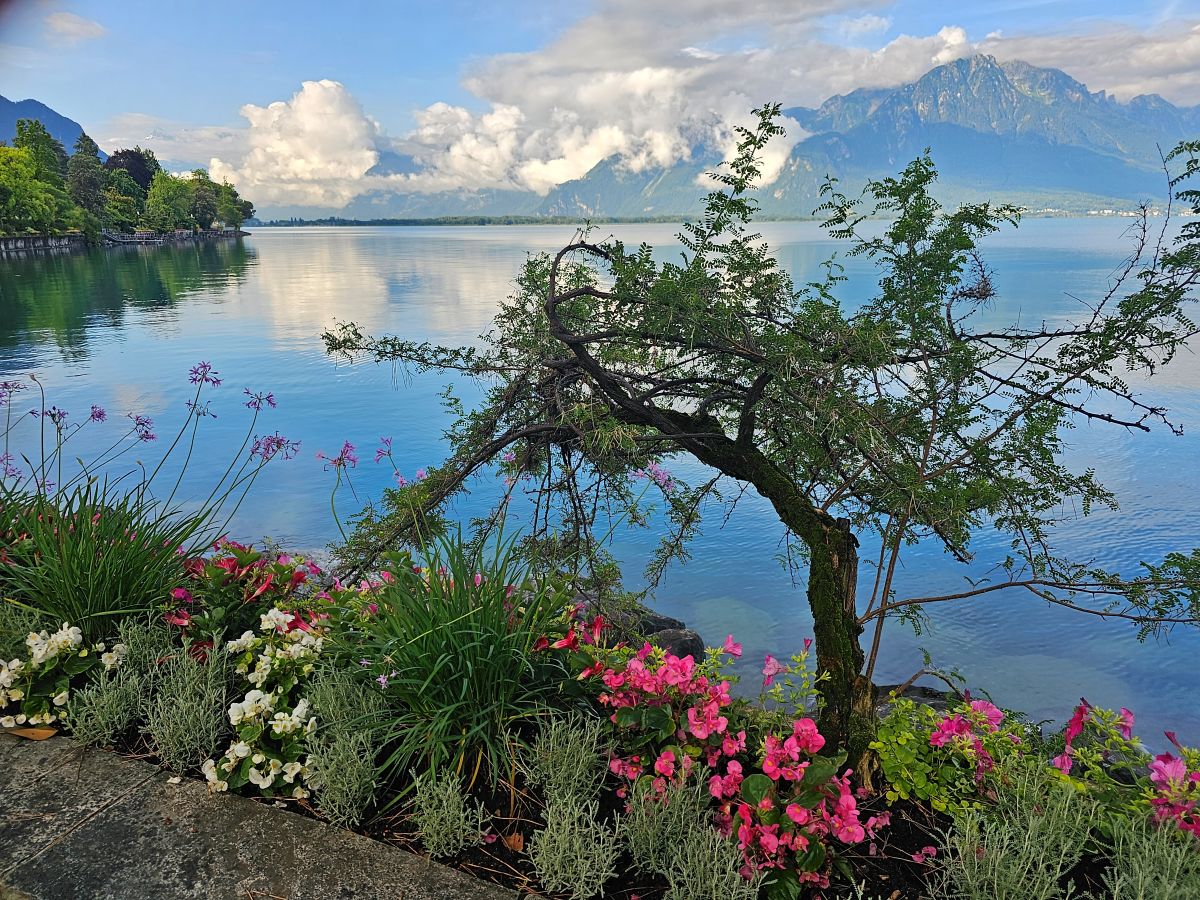
I’ve now visited Montreux in summer and at Christmas, and it’s become one of my favorite places in Switzerland. The lakefront is beautiful, with mountains across the water, flower-filled walkways and cafés where it’s very easy to lose track of time. What surprised me was how much there was to do beyond simply enjoying the view, from a medieval castle right beside the lake to some of Switzerland’s loveliest train journeys.
For Americans planning a Switzerland vacation, Montreux is an especially useful stop because it fits so naturally into a train itinerary. It’s easy to reach from Geneva, works well before or after Interlaken, and doesn’t require a rental car. This guide brings together the best things to do in Montreux, the experiences I’ve enjoyed myself and a few that are still on my list, along with practical information to help decide what deserves a place in your itinerary.
Disclosure: CiaoBonjour may earn a commission from qualifying bookings made through affiliate links, at no additional cost to you. Any affiliate links will be clearly identified where used.

1. Walk Along the Lake Geneva Promenade
If I had to choose just one thing to do in Montreux, it would probably be walking along the lakefront. That might sound a little underwhelming when Switzerland has so many famous attractions, but the setting really is that lovely, and it’s one of the main reasons I enjoyed the town so much.
The promenade follows the shore of Lake Geneva, with beautiful views over the water towards the mountains, landscaped gardens, sculptures and plenty of places to stop for a drink. During my summer visit, the flowers were out and the lake looked a brilliant blue, while my return in winter felt completely different, with festive chalets and lights taking over parts of the waterfront. Both were enjoyable for different reasons, and I found myself spending far longer here than I’d planned.
It’s also somewhere that works particularly well on arrival day. After a flight into Geneva and a train ride to Montreux, there’s no need to immediately book a major excursion. I would drop my bags at the hotel and head straight to the lake for a walk, perhaps stopping near the Freddie Mercury statue before finding somewhere for dinner. The central section is easy to explore, and there’s no admission fee or timetable to worry about.
For visitors who enjoy walking, it’s possible to continue along the lakeside in the direction of Chillon Castle, although you don’t need to cover the whole distance to appreciate the scenery. Personally, I wouldn’t rush this part of Montreux. The promenade was one of those places where I kept stopping for photographs, and it ended up being as memorable as some of the attractions I’d planned in advance.

2. Visit the Freddie Mercury Statue
The Freddie Mercury statue is one of Montreux’s best-known landmarks, and because it stands right beside the lake, it’s easy to include while exploring the promenade. You’ll find it at Place du Marché, not far from the covered market and the central waterfront, with the mountains providing a lovely backdrop.
Montreux has a strong connection with Queen. Freddie Mercury spent time here, and the band recorded music at Mountain Studios in the town. The bronze statue was unveiled in 1996 and shows him in that unmistakable pose, with one arm raised. Even now, fans regularly leave flowers and messages around it, so it feels like more than just another sightseeing stop.
I wouldn’t suggest setting aside a huge amount of time for the statue itself, but I would absolutely include it as part of a walk around town. You can stop for photographs, take in the views and then carry on along the waterfront towards the cafés and nearby attractions. It’s particularly convenient if you only have a day in Montreux, because you don’t need to travel out of your way to see it.
For anyone who grew up listening to Queen, visiting the statue can have a little more meaning, and there’s another nearby attraction worth pairing with it. The Queen Studio Experience gives a much fuller picture of the band’s time in Montreux, which makes the two places an easy combination. The statue is accessible year-round and costs nothing to visit, so it’s also one of the simplest additions to a Switzerland itinerary that can otherwise become rather expensive.
3. Explore the Free Queen Studio Experience
Something that surprises people about Montreux is that one of its most interesting indoor attractions is completely free. The Queen Studio Experience is inside Casino Barrière de Montreux, where the former Mountain Studios have been turned into a small exhibition dedicated to Queen and Freddie Mercury.
The exhibition includes memorabilia and information about the band’s recording history, along with a recreation of the recording environment. It’s a good way to understand why Montreux became such an important place for Queen, rather than simply seeing the statue outside and moving on. For music fans, I’d allow more time than you might initially expect, particularly if you enjoy reading about the band’s work and looking through the displays.
This is also a useful option for a wet or cold day, something worth remembering if you’re traveling through Switzerland outside the summer months. Although Montreux is known for its lake and mountain scenery, the weather isn’t always going to cooperate, and having a free indoor attraction in the town center gives you a little flexibility.
I haven’t included this as one of my own visited experiences, so I’d check the current opening information before planning around it. At the time of writing, the exhibition advertises free admission, with donations supporting the Mercury Phoenix Trust, and is reached through the casino entrance on Rue du Théâtre. It’s within walking distance of the waterfront and Freddie Mercury statue, making the two an easy pairing even on a fairly relaxed day.
Check Queen Studio Experience visitor information.
4. Discover Chillon Castle Beside the Lake
Chillon Castle is one of those places where the setting is almost as impressive as the attraction itself. Built on a rocky island beside Lake Geneva near Montreux, it looks quite different from the hilltop castles you might expect to find elsewhere in Europe. The water comes right up to the walls, with mountains rising in the background, and it’s very easy to understand why so many visitors make time for it.
On my visit, I particularly loved photographing the castle from outside, including a view through a circular sculpture with the building beyond it. It’s a beautiful spot in the evening when the light is changing, and I think the exterior alone makes the journey worthwhile if you’re short on time. I wouldn’t pretend to have explored every room inside, though, and there’s considerably more to see if you choose to buy an admission ticket.
Inside, visitors can explore historic rooms, courtyards and underground spaces and learn about the castle’s long history. I’d set aside roughly one to two hours for the interior, depending on how interested you are in history. Even families who aren’t usually enthusiastic about museums may find the setting and layout more engaging than a traditional exhibition.
You can reach the castle by walking along the waterfront, taking local bus 201 or using public transportation to the nearby area. Adult admission was CHF 15, approximately $18 at the exchange rate checked in October 2026, with children’s tickets at CHF 7. Discounts may apply with rail passes or the Montreux Riviera Card, so check the official ticket information before paying full price. It’s one of the few paid town attractions I’d seriously consider prioritizing.

Chillon Castle official website and current tickets.
5. Take the GoldenPass Express Toward Interlaken
Montreux was originally part of my itinerary because of the GoldenPass railway, and after traveling on the GoldenPass Express, I can see why the route is so popular. Rather than being a train journey you simply need to get through, it’s the sort of trip where the scenery becomes one of the main events of the day.
The GoldenPass Express connects Montreux with Interlaken Ost in approximately three hours and fifteen minutes, passing through the Gstaad region and some beautiful Swiss countryside. I traveled in Prestige Class, which has raised seating and large windows designed to make the most of the views. I loved the experience, although I wouldn’t say you need to pay for the most expensive seats to enjoy the journey. The landscape outside is what makes the route special, and that’s visible throughout the train.
For Americans putting together a Switzerland itinerary, I’d particularly recommend considering the GoldenPass Express as a way to move between destinations. If you’re staying in Montreux and then heading to Interlaken, Grindelwald or Lauterbrunnen, the train can become part of the vacation rather than taking up an extra sightseeing day. It’s also a lovely way to watch the scenery change as you leave Lake Geneva behind and travel towards the Bernese Oberland.
Prices depend on the travel date, class, rail pass and whether you choose a seat reservation. I’d compare the fare on the official railway website against any Swiss Travel Pass or Swiss Half Fare Card you intend to use, rather than relying on a single advertised price. If you’re short on time, I’d take this train as an onward journey instead of making a six-hour-plus round trip purely to return to Montreux.
GoldenPass Express official route and booking information.
6. Ride the GoldenPass Belle Époque Train
Although I loved the panoramic views from the GoldenPass Express, the Belle Époque train was possibly the more memorable experience for me. I traveled on both during my Switzerland trip, and they felt surprisingly different considering that they share some of the same scenery.
Where the Express is modern, with large windows and contemporary seating, the Belle Époque has vintage-style interiors that make the journey feel rather special. The wooden detailing, traditional seating and old-fashioned atmosphere are a big part of the appeal. I traveled in first class, and I remember enjoying the carriage itself almost as much as the view outside. It felt more like an experience than simply taking another train.
The Belle Époque runs between Montreux and Zweisimmen, rather than going directly through to Interlaken in the same way as the GoldenPass Express. From Zweisimmen, you can continue your journey using connecting trains. That distinction is worth understanding when you’re planning a longer Swiss vacation, especially if you want to avoid unnecessary connections with luggage.
I’d choose between the two based on the kind of journey you enjoy. If the priority is an easy direct connection to Interlaken, the Express makes more sense. On the other hand, if vintage rail travel appeals and you’re happy to build the journey around the train itself, the Belle Époque is a lovely option. The train operates as part of the regular rail network, so you’ll need the appropriate ticket or pass, but you don’t necessarily need an elaborate tour package. Check the current timetable because specific departure times can change.

Check the GoldenPass Belle Époque service.
7. Take the Mountain Train to Rochers-de-Naye
Rochers-de-Naye is the Montreux excursion I still haven’t managed to fit into one of my trips, and it’s probably the first thing I’d book if I returned for a longer stay. While the lakeside is beautiful, taking a train high into the mountains offers a completely different perspective on the area.
A cogwheel railway climbs directly from Montreux to Rochers-de-Naye, reaching an altitude of 2,042 meters, around 6,700 feet. The journey takes approximately 55 minutes each way and passes through changing scenery as the train leaves the town behind. On a clear day, the views stretch across Lake Geneva and towards the surrounding Alps, which is the main reason I’d want to include it.
This is the sort of excursion I’d plan around the weather rather than fitting into a rigid timetable. Mountain viewpoints can be spectacular when conditions are clear but much less rewarding when the summit is covered in cloud. If you’re spending two nights in Montreux, having some flexibility over which day you travel could make a real difference. I’d check the forecast and the railway operating information before committing to a particular departure.
In the Christmas season, the mountain also becomes home to Santa’s House, reached by a special train experience. Families hoping to include that should check booking arrangements well in advance, as it is a separate seasonal attraction rather than something automatically included with an ordinary mountain ticket. For year-round visitors, Rochers-de-Naye is most appealing as a scenic mountain excursion, particularly if you don’t have time to visit many Alpine viewpoints elsewhere in Switzerland.
Montreux Riviera visitor information and mountain railway details.
8. See Montreux From a Lake Geneva Boat Cruise
After spending so much time admiring Lake Geneva from the promenade, it’s easy to see why taking a boat across the water is another popular Montreux experience. A cruise gives a different view of the lakefront, the mountains and Chillon Castle, and it can be a lovely addition if you have more than a single day in the area.
CGN operates sightseeing cruises and passenger boat services on Lake Geneva, with schedules varying according to the season. Some routes travel along the Riviera towards Chillon Castle and nearby lakeside towns, while longer options connect different parts of the lake. I’d decide what you want from the experience before booking, because there’s a difference between a short sightseeing cruise and using a boat as transportation between destinations.
For visitors planning a Switzerland vacation by train, the boat can also be a way of varying the journey. You might spend the morning in Montreux and then travel by water for part of the afternoon, rather than using the railway for every short trip. The main consideration is time: boats are generally slower than trains, and services can be limited outside the main season. I’d check the departure and return times carefully, particularly if you have a dinner reservation or another train to catch.
I haven’t taken a Montreux sightseeing cruise myself yet, so this is one I’d put in the optional category rather than above the places I’ve personally loved. If the weather is good and you’ve already covered the waterfront and castle, though, it’s an appealing way to enjoy the setting without packing more walking into the day. Compare cruise fares and rail pass conditions before buying, as discounts or included journeys may be available.
CGN official cruises and timetables.
9. Explore Montreux’s Old Town and Quieter Streets
Most of the photographs you’ll see of Montreux focus on the waterfront, but there’s more to the town once you begin heading away from the lake. The older streets rise uphill behind the main shopping area, giving Montreux a different feel from the elegant hotels and promenades below.
I think it’s worth allowing a little time to wander rather than spending the entire visit moving from one named attraction to the next. In the central area, you’ll find cafés, shops and the grand buildings that give Montreux much of its character. As the streets climb, the atmosphere changes, and there are opportunities to look back towards the lake and mountains from higher viewpoints.
One thing I’d bear in mind is that the town becomes noticeably steeper as you move away from the waterfront. If you’re traveling with young children, someone with limited mobility or simply don’t fancy a long uphill walk, you don’t need to cover every part of the old town. The lakeside remains the easiest area to explore, with more accessible paths and plenty of places to stop along the way.
Montreux is also a good place to leave a little unplanned time in your itinerary. On my trips, some of the most enjoyable moments have been the simplest ones, including stopping for a drink, wandering past the sculptures and watching the light change over the water. I’d much rather have an afternoon with time to enjoy the surroundings than try to squeeze in three paid attractions and spend the whole day checking the clock. That slower pace is part of what makes Montreux such a good overnight stop.
10. Take a Short Trip to Vevey
If you’re staying in Montreux for more than one night, Vevey is one of the easiest nearby places to add to your itinerary. It’s another attractive town on Lake Geneva, just a short train ride away, and it makes sense to combine the two rather than treating Montreux as an isolated stop.
Vevey has its own lakeside promenade, restaurants and views over the water, along with attractions associated with Charlie Chaplin, who spent the later part of his life in the area. Chaplin’s World, a museum devoted to the actor and filmmaker, is a popular reason to visit, particularly for families or anyone interested in film history. There’s also the famous giant fork sculpture in the lake near the Alimentarium food museum, which is one of Vevey’s more unusual landmarks.
I’d consider Vevey for a half-day outing if you want to explore beyond Montreux without committing to a full day in the mountains. Because the towns are close together, you can travel there after breakfast, enjoy a walk and lunch, and still return to Montreux for the evening. That works particularly well when you’re traveling without a car and don’t want complicated transport arrangements.
Another possibility for a longer stay is to explore the Lavaux vineyard terraces farther along Lake Geneva. The vineyards are a UNESCO-listed landscape and make a lovely contrast to the castle, mountains and town attractions. I’d treat that as a separate half-day excursion rather than assuming everything fits into one afternoon. Together, Vevey and the surrounding Riviera are part of the reason I think Montreux makes a good base for two or three days instead of only a quick stop on the way to Interlaken.
11. Visit During the Montreux Jazz Festival
Montreux is famous for its annual jazz festival, and it’s one of the experiences I’d like to plan a return trip around. During my summer visit, preparations were underway around the waterfront, and I remember realizing that I’d come at almost the right time without actually arranging my trip to coincide with the festival itself.
Despite the name, the Montreux Jazz Festival isn’t limited to traditional jazz. It attracts performers from a wide range of musical genres and has become one of Europe’s best-known music events. The atmosphere around the lake is a major part of the experience, with the festival bringing stages, visitors and activity to an area that’s already lovely to spend time in during summer.
For Americans planning a trip around a particular event, I’d look at the festival calendar before booking flights or accommodation. The town is likely to feel much busier than it does at other times of year, and popular hotels may be more expensive or book up earlier. That doesn’t necessarily make it a reason to avoid Montreux in July, but it does mean I’d make a deliberate choice about whether I wanted to be there for the music.
The festival also publishes information about free programming, so you don’t necessarily have to buy tickets to a major concert to enjoy some of the atmosphere. Exact events and access conditions vary by year. As of October 2026, the next announced festival dates are July 2–17, 2027. I’d check the official program before making plans, particularly if you’re hoping to see a specific artist. Personally, this is one experience I’d love to add to my list after having visited Montreux in two very different seasons already.
Montreux Jazz Festival official website.
12. Visit the Montreux Christmas Market and See Flying Santa
Montreux at Christmas was the reason I returned for a second visit, and I loved seeing how different the town felt in winter. I’d already enjoyed the waterfront in summer, but with the Christmas stalls set up beside Lake Geneva, the whole area takes on another atmosphere. The lights, mountains and lake make it a very different setting from the Christmas markets held in big European city squares.
On that trip, we traveled from the UK to Geneva and then continued by train to Montreux, spending the afternoon exploring the market before heading home again. It was a very full day, but it reminded me how easy Montreux is to reach by public transportation. For anyone flying from the United States, I’d obviously recommend a much more relaxed visit as part of a longer Switzerland vacation rather than trying to fit everything into a single day.
One of the best-known attractions is Flying Santa, a free show where Santa appears to fly above the waterfront. There are also wooden market chalets, seasonal food, decorations and a Ferris wheel overlooking the lake. The combination works particularly well for families, although I enjoyed the market as an adult too. It is easy to spend an afternoon simply wandering between the stalls and enjoying the atmosphere.
For 2026, Montreux Noël is scheduled for November 20 through December 24, with Flying Santa performances at advertised times during the market. The Ferris wheel is listed at CHF 8, about $10 at the exchange rate checked in October 2026. Anyone hoping to visit Santa’s House at Rochers-de-Naye should look into the separate train experience and ticket availability in advance. I’d also be careful when planning around Christmas Day, because the market finishes on Christmas Eve rather than continuing into the New Year.


Check this year’s Montreux Christmas Market dates and attractions.
Planning Your Montreux Visit: Costs, Transport and Timing
One of the reasons I’d recommend Montreux to Americans planning a first or second Switzerland vacation is that you can see quite a lot without renting a car. The train station is central, many of the main attractions are around the waterfront, and the local transport network makes it straightforward to reach places such as Chillon Castle and Vevey. If you’re arriving from Geneva Airport, train connections make Montreux an easy addition to the start of a Swiss itinerary.
For a single day in Montreux, I’d prioritize the promenade, Freddie Mercury statue and Chillon Castle, leaving time for lunch or dinner by the lake. With two days, you could add the Rochers-de-Naye mountain railway or a lake cruise. If the GoldenPass Express is part of your plans, I’d ideally use it as the journey onward to Interlaken rather than fitting the full route into your Montreux sightseeing day. That way you’re not sacrificing time in the town purely to spend six or seven hours traveling back and forth.
Switzerland can be expensive, but Montreux is a destination where you can balance free activities with one or two paid experiences. The waterfront, statue and Queen exhibition cost nothing, while castle admission, mountain railways, longer scenic trains and cruises can add more to the budget. If you’re comparing costs in US dollars, remember that prices are charged in Swiss francs and the exchange rate changes. For the examples in this guide, I used approximately CHF 1 = $1.20 in October 2026, but the rate may be different when you travel.
I’d also ask your accommodation about the Montreux Riviera Card. Participating hosts provide this guest card, which includes travel on specified local public transportation zones and discounts at some attractions. It isn’t a replacement for a nationwide Swiss Travel Pass, and the exact benefits should always be checked against your planned activities. For train schedules and regular fares, the official SBB website is a useful starting point, while the individual railways and attractions are best for special experiences and reservations.
Frequently Asked Questions About Montreux
What are the best free things to do in Montreux?
Walking the Lake Geneva promenade and visiting the Freddie Mercury statue would be my first choices, particularly because they’re right in the center of town and don’t require any planning. The Queen Studio Experience is another free attraction, and simply exploring the lakefront gardens, sculptures and cafés can fill a surprisingly enjoyable part of the day. You don’t have to book a paid mountain excursion to appreciate Montreux.
Is Montreux worth visiting if I’m already going to Interlaken?
Yes, I think the two complement each other really well. Montreux has a relaxed lakeside atmosphere and easy access to the GoldenPass trains, while Interlaken is better placed for exploring areas such as Grindelwald and Lauterbrunnen. I originally used Montreux as a stop along that very route and ended up enjoying it far more than I’d expected. If your itinerary allows, I’d spend a night in Montreux rather than passing straight through.
Can you explore Montreux without a car?
Absolutely. I’ve traveled through Switzerland using public transportation, and Montreux is well suited to that approach. The station connects with destinations around Lake Geneva and the rest of Switzerland, while local buses and walking cover many of the attractions in this guide. In fact, for a visit focused on the town, trains and scenic excursions, I’d consider a rental car more trouble than it’s worth.
How many days do you need in Montreux?
One full day is enough for the main sights, especially the waterfront, statue, Chillon Castle and town center. I’d stay two days if Rochers-de-Naye, a Lake Geneva cruise or nearby Vevey is important to you. A third day can work well if you’re using Montreux as a base or visiting during the Christmas market or jazz festival. My own first stay was only one night, and it was enough to persuade me to come back.
Would I Recommend Montreux?
Without hesitation. I’ve visited some beautiful places in Switzerland, but Montreux stands out because it offers so many different experiences without feeling like a destination where every minute needs to be planned. There are famous attractions if you want them, yet some of my favorite moments have involved nothing more complicated than walking by the lake and stopping to enjoy the view.
What I particularly like is how naturally Montreux fits into a longer Switzerland vacation. You can arrive from Geneva, spend time by Lake Geneva, explore Chillon Castle and then continue towards Interlaken on one of the GoldenPass trains. In summer, the waterfront is full of flowers and life, while a winter visit brings the Christmas market and a completely different atmosphere.
If I were planning the trip again, I’d stay for at least two nights and finally make time for Rochers-de-Naye. But even if you only have a day, I’d still make room for Montreux. It started as a convenient overnight stop on my itinerary and became somewhere I’ve deliberately returned to, which probably says more about how much I enjoyed it than anything else.
About this guide: Written using my own visits to Montreux in summer and at Christmas, including journeys on the GoldenPass Express and Belle Époque. Some suggested attractions, including Rochers-de-Naye and the lake cruise, are recommendations for future trips rather than experiences I’ve personally completed. Prices, seasonal schedules and opening times were checked in October 2026 and can change.
Leave a Reply