Is the GoldenPass Belle Époque worth it? If you’re planning a scenic train journey through Switzerland, you’ve probably come across photographs of its beautiful vintage-style carriages. With polished wood interiors, elegant seating and views of the Swiss Alps, it looks like something from another era.
But does the experience actually live up to the photographs, and is it worth paying extra for First Class?
I traveled on the GoldenPass Belle Époque during a summer trip through Switzerland, boarding in Montreux and traveling to Zweisimmen before continuing towards Interlaken. I chose First Class, and it ended up being one of my favorite railway experiences.
What surprised me most was how different it felt from the GoldenPass Express, which I’ve also traveled on in Prestige Class. While the Express is all about panoramic windows and incredible scenery, the Belle Époque feels much more about the experience of being on the train itself.
In this guide, I’ll share what my journey was like, what you can expect in First Class, how ticket prices and reservations work, and whether I’d recommend choosing the Belle Époque over the GoldenPass Express.
Just a quick note before we begin: Some posts on this blog contain affiliate links. This means we may earn a small commission if you make a purchase through these links, at no extra cost to you. We only recommend products we genuinely love or believe will be helpful in your trip planning journey. Thanks for supporting our work and happy planning!
What Is the GoldenPass Belle Époque?
The GoldenPass Belle Époque is a scenic train operating between Montreux and Zweisimmen in Switzerland. It’s part of the GoldenPass railway network, which connects the Lake Geneva region with the Bernese Oberland.
What makes this train different is its design. Instead of the modern panoramic carriages you might expect on a famous Swiss scenic railway, the Belle Époque has interiors inspired by elegant rail travel from the early twentieth century.
You’ll find beautiful wood paneling, traditional seating and decorative details that give the carriages a completely different atmosphere from an ordinary train.
It’s important to know that these are vintage-inspired carriages rather than an original steam train. You’re still traveling on a regular railway route, but the interior is designed to capture some of the elegance of an earlier era.
Personally, that was what attracted me to the Belle Époque in the first place. I enjoy scenic railways, but I also love experiences that feel a little different from ordinary sightseeing.
And after stepping into First Class, I could immediately see why this particular train is so popular.

My Experience Traveling First Class on the GoldenPass Belle Époque
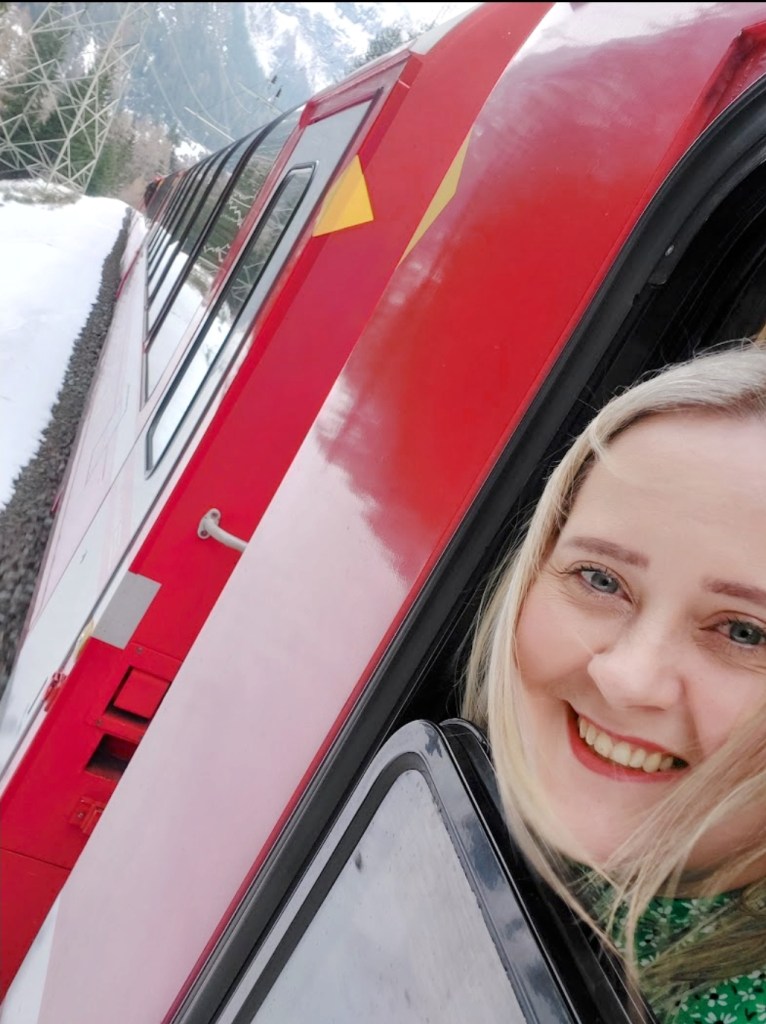
I boarded the GoldenPass Belle Époque at Montreux railway station on a drizzly July morning.
My train departed at 9:50 a.m., and I’d planned the journey as part of a longer trip through Switzerland rather than a separate day excursion. I was traveling solo and would be continuing onwards to Interlaken later in the day.
I’ll admit that the weather wasn’t exactly what I’d hoped for when planning a scenic railway journey. Switzerland had other ideas, and the morning was gray and wet.
However, as soon as I stepped onboard, the weather became much less important.
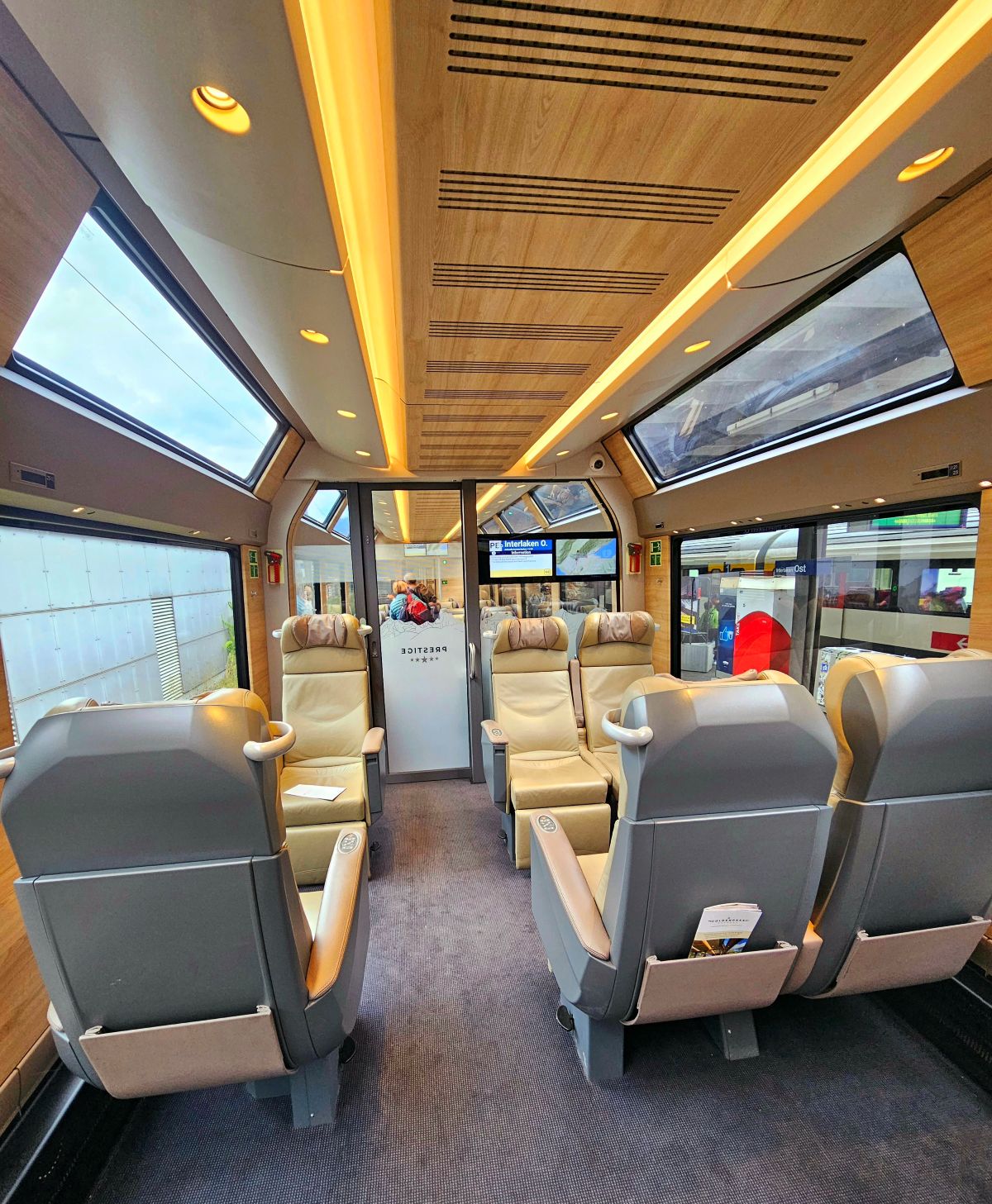
The First Class carriage was beautiful, with wood-paneled interiors and traditional seating that felt completely different from a modern train. There was something really lovely about settling into a carriage that looked so elegant before we’d even started moving.
I think this was the moment I realized the Belle Époque was going to be a different experience from the GoldenPass Express.
On a modern panoramic train, you tend to spend your time looking directly outside. On the Belle Époque, I kept looking around the carriage too, appreciating the woodwork and the atmosphere.

What Was the First Class Carriage Like?
I loved it.
The carriage felt comfortable, spacious and relaxed, with beautiful vintage-style details. It was elegant without feeling overly formal, and I didn’t feel as though I needed to dress up or do anything differently from an ordinary train journey.
There was plenty to look at, both inside and outside, and the whole experience felt a little more leisurely than I expected.
During the journey, I enjoyed a glass of wine while watching the Swiss countryside pass by. Sitting in that beautiful carriage with a drink, surrounded by mountain scenery, was one of those lovely travel moments that didn’t need anything else added to it.
What I particularly liked was that the journey didn’t feel like two hours. The scenery kept changing, and the atmosphere onboard made the time pass surprisingly quickly.
Did the Rain Spoil the Scenery?
Not at all.
Of course, clear blue skies would have been lovely, especially for photographs. But the scenery was still beautiful, and the low clouds actually gave parts of the journey a different atmosphere.
One thing I liked about the Belle Époque was that I didn’t feel quite so dependent on the weather as I might have on a train where the panoramic views were the main attraction.
The scenery was still an important part of the journey, but the carriage itself made the experience enjoyable even when the weather wasn’t perfect.
If you’re only in Switzerland for a few days and the forecast looks mixed, I wouldn’t automatically cancel a Belle Époque journey because of a little rain.
It’s one of the reasons I think this train offers something different from the more famous panoramic services.
What Is the GoldenPass Belle Époque Route Like?
The GoldenPass Belle Époque travels between Montreux and Zweisimmen, passing through the beautiful countryside of western Switzerland and the Gstaad region.
The journey normally takes around 2 hours and 10 minutes, although you should check the exact timetable for your travel date.
The scenery changes throughout the journey, which is something I particularly enjoyed.
Leaving Montreux and Lake Geneva
The train begins at Montreux, a beautiful town on the shores of Lake Geneva.
As you depart, the railway begins climbing away from the lakeside, offering glimpses of the water and surrounding mountains.
Montreux itself is well worth spending time in before you board the train. I’ve visited twice, once in summer and again at Christmas, and it’s become one of my favorite places in Switzerland.
If you’re planning to stay overnight, my Montreux itinerary for 1, 2 or 3 days includes the main sights and some lovely excursions around Lake Geneva.
Through Swiss Villages and Mountain Countryside
Once the train has climbed away from Montreux, the landscape gradually changes.
You’ll travel through countryside, forests and traditional Swiss villages, with mountain scenery appearing throughout the journey.
The route passes through the Pays-d’Enhaut region and towards Gstaad, where the scenery feels very different from the lakeside landscape around Montreux.
For me, this changing scenery is what makes the GoldenPass railway particularly appealing. You’re not looking at exactly the same landscape for two hours.
You’ll see different sides of Switzerland during a relatively short journey, from Lake Geneva to the mountain villages of the Bernese Oberland.
Arriving in Zweisimmen
The Belle Époque finishes its journey at Zweisimmen, a small Swiss town that also serves as an important railway connection.
On my trip, I decided to spend around two and a half hours in Zweisimmen before continuing towards Interlaken.
I actually think this worked really well. Rather than stepping straight off one train and rushing to another, I had time to explore a little and enjoy a break.
Zweisimmen isn’t somewhere I’d necessarily recommend spending several nights unless you’re planning to explore the surrounding mountains, but it’s a pleasant place to stop during a longer railway itinerary.
If you have extra time, you could also look into the Rinderberg cable car, which departs from the area and provides access to the surrounding mountains. Check operating dates and weather conditions before planning your stop around it.

GoldenPass Belle Époque First Class vs Second Class
One of the biggest decisions when booking the Belle Époque is whether to pay extra for First Class.
I traveled in First Class, so that’s the experience I can describe in detail. However, both classes travel along exactly the same route, so you’re not paying extra for different scenery.
Is First Class Worth It?
For me, yes.
I chose the Belle Époque because I wanted the experience of traveling in a beautiful vintage-style train, and First Class really added to that.
The carriage felt spacious and comfortable, with a relaxed atmosphere that suited the whole experience perfectly.
I also liked the fact that I could simply sit back and enjoy the journey without feeling rushed or crowded.
Would I pay extra for First Class again? If the difference in ticket price was reasonable for my budget, absolutely.
However, I wouldn’t say it’s essential. If you’re already spending a lot on a Switzerland vacation, Second Class is a sensible way to enjoy the same scenic railway without adding unnecessary costs.
What Is Second Class Like?
Second Class still features the Belle Époque’s distinctive vintage-inspired styling, although the seating is generally more compact than in First Class.
You still get the same railway journey, mountain scenery and atmosphere of traveling in a special train.
I’d particularly consider Second Class if you’re traveling as a family or booking several scenic rail journeys during the same vacation.
Switzerland has so many beautiful train journeys that paying for First Class every time can add up quickly.
My recommendation: Choose First Class if the vintage carriage experience is a highlight of your trip and the price difference fits your budget. Choose Second Class if you’re primarily interested in the scenery. Both are worthwhile.
How Much Does the GoldenPass Belle Époque Cost?
The cost depends on the route you travel, whether you choose First or Second Class, and whether you’re using a Swiss rail pass or another discount.
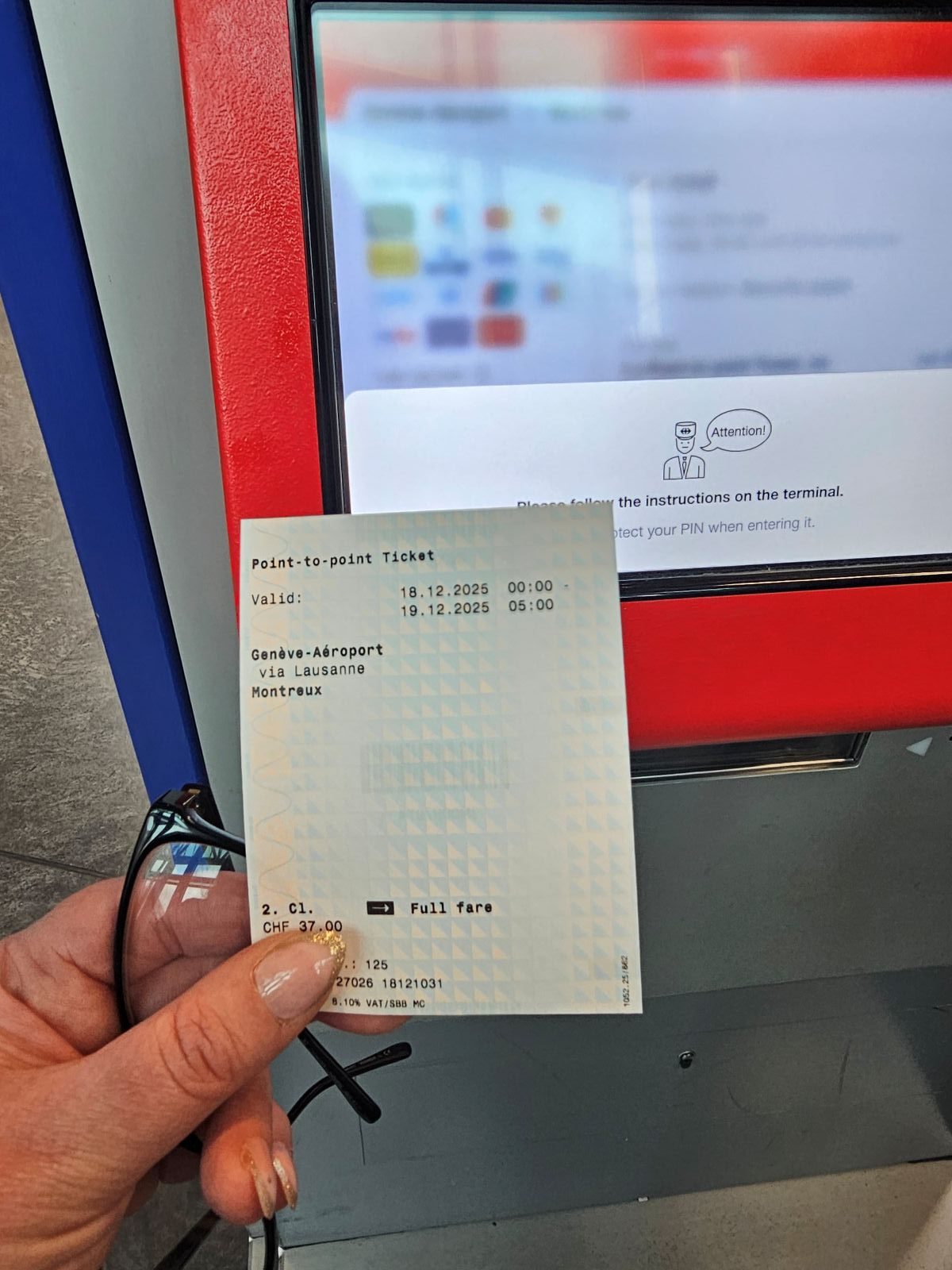
When I previously researched fares for the full Montreux to Zweisimmen journey, the indicative prices were around CHF 34 for Second Class and CHF 59 for First Class, before any optional seat reservation. These are examples from an earlier fare check, not guaranteed prices for your travel date.
I’d always check the current fare directly before budgeting. Swiss railway booking systems may show different prices depending on the ticket type or discount selected, so make sure you’re comparing the fare you’re actually eligible to buy.
The local currency is the Swiss franc (CHF). If you’re visiting from the United States, your card provider will convert the amount into US dollars using the applicable exchange rate.
Do You Need to Reserve a Seat?
Seat reservations are optional on the GoldenPass Belle Époque, but I’d recommend making one if you have a particular departure in mind.
There are relatively few Belle Époque departures compared with ordinary Swiss railway services, so I’d rather know I had a reserved seat than take my chances during a busy travel period.
According to the railway operator MOB, a Belle Époque seat reservation costs CHF 10 per person per journey. Check the current amount before booking.
Remember that a seat reservation is not the same as a train ticket. Unless you already have a valid pass covering the journey, you’ll need both a travel ticket and an optional reservation if you choose to book a specific seat.
Check the official seat reservation information.
Can You Use a Swiss Travel Pass?
Yes. The GoldenPass Belle Époque is covered by the Swiss Travel Pass, making it a useful option if you’re already planning several railway journeys around Switzerland.
If your pass covers the class you’re traveling in, you don’t need to buy a separate point-to-point ticket for this route. However, a seat reservation is still a separate optional expense.
Make sure your travel class is correct. A Second Class Swiss Travel Pass doesn’t automatically entitle you to travel in First Class without an appropriate upgrade.
If you’re planning a longer Switzerland trip, I’d compare the cost of the pass against individual tickets before purchasing. A pass can offer good value on an itinerary with lots of train travel, but it isn’t automatically the cheapest option for every visitor.
How to Book the GoldenPass Belle Époque
You can book the journey through the official MOB railway booking website or use the Swiss Federal Railways journey planner to check train times and travel ticket options.
I’d recommend the following approach:
- Decide whether you’re traveling from Montreux to Zweisimmen or in the opposite direction.
- Check the timetable for a departure specifically marked GoldenPass Belle Époque.
- Choose First or Second Class.
- Select the appropriate travel ticket or rail pass discount.
- Add a seat reservation if you want a guaranteed seat.
- Check whether you need a separate connection beyond Zweisimmen.
Don’t assume every train between Montreux and Zweisimmen uses Belle Époque carriages. Different railway services operate in this region, so it’s important to select the right train if the vintage interior is the reason you’re booking.
Book through the official MOB journey planner.
Check Swiss railway connections on SBB.

Food, Luggage and Practical Tips
Is There Food and Drink on the Belle Époque?
During my journey, drinks and snacks were available onboard, and I enjoyed a glass of wine in First Class.
It fitted the atmosphere of the train perfectly. Sitting in a vintage-style carriage with a drink while the Swiss countryside passed outside was one of my favorite moments of the journey.
There was also a menu showing the refreshments available, which was a nice touch and made it feel more like a special railway experience.
However, I wouldn’t plan around having a full restaurant meal onboard. Food and drink services can vary, so I’d check what’s available for your particular departure and bring something with you if you’re likely to get hungry.
You’re also generally able to bring your own food and drinks, which is useful if you’re trying to keep your Switzerland travel costs down.

Can You Take Luggage?
Yes, you can travel with luggage on the Belle Époque.
This makes it practical for including the journey between hotel stays rather than having to return to Montreux afterwards.
There is luggage storage available, although I’d avoid traveling with more than you can comfortably manage through stations and when boarding the train.
For my own Switzerland trips, I like arranging scenic railway journeys between destinations wherever possible. That way, the train becomes part of the vacation rather than an additional day trip that needs to fit around everything else.
Which Side of the Belle Époque Has the Best Views?
If you’re traveling from Montreux towards Zweisimmen, the left side can offer lovely views towards Lake Geneva during the earlier part of the journey.
However, I wouldn’t worry too much about reserving one particular side.
The train twists and turns through the countryside, and the scenery changes throughout the journey. Both sides have plenty to enjoy, so I’d be more concerned about having a comfortable seat than trying to find the one perfect viewing position.
Is the Belle Époque Accessible?
If you need wheelchair access or assistance boarding, I’d contact MOB before booking.
The vintage-style carriage layouts can have different accessibility arrangements from modern trains, and assistance or suitable spaces may need to be organized in advance.
It’s worth confirming what’s available on your specific departure rather than assuming the arrangements will be identical to those on the GoldenPass Express.
GoldenPass Belle Époque vs GoldenPass Express: Which Is Better?
I’ve been fortunate enough to travel on both trains, and this is probably the question I get most excited about answering.
The GoldenPass Express and Belle Époque share some of the same beautiful Swiss scenery, but they’re very different experiences.
The GoldenPass Express has huge panoramic windows and feels designed around the views. I traveled in Prestige Class, with raised seating that makes the scenery even more immersive.
The Belle Époque, on the other hand, feels more intimate and atmospheric. I spent just as much time appreciating the carriage interior as I did watching the landscape outside.
| Feature | Belle Époque | GoldenPass Express |
|---|---|---|
| Route | Montreux to Zweisimmen | Montreux to Interlaken Ost |
| Journey time | About 2 hr 10 min | About 3 hr 15 min |
| Train style | Vintage-inspired carriages | Modern panoramic train |
| Travel classes | First and Second | Prestige, First and Second |
| Best for | Atmosphere and classic railway travel | Panoramic views and a direct Interlaken connection |
Which Train Has the Best Scenery?
I don’t think there’s a clear winner.
The GoldenPass Express has those enormous panoramic windows, which are wonderful for enjoying the mountain views. The journey is longer too, continuing all the way to Interlaken.
However, I was surprised by how little I missed the panoramic windows when traveling on the Belle Époque.
The scenery was still beautiful, and the traditional carriage gave me something else to appreciate during the journey.
Which Train Feels More Special?
For me, the Belle Époque probably wins for atmosphere.
That’s not because the GoldenPass Express isn’t impressive. I loved traveling in Prestige Class, and the raised leather seats and panoramic windows made it feel like a special occasion.
But the Belle Époque has a character that’s harder to find on modern trains.
If you love the idea of sitting in an elegant vintage-style railway carriage, it’s an experience I’d happily recommend.

Which Would I Choose for a First Trip to Switzerland?
If you’re traveling between Montreux and Interlaken and simply want the easiest scenic connection, I’d probably recommend the GoldenPass Express.
It’s normally a direct service, so you can enjoy the scenery without changing trains at Zweisimmen.
But if you particularly enjoy unusual trains, vintage interiors or slower-paced travel, I’d choose the Belle Époque.
Having experienced both, I’d happily travel on either one again.
I wouldn’t necessarily pay to travel the same section of railway twice just to tick off both trains, though. If you can include them naturally in your itinerary, wonderful. Otherwise, choose the experience that appeals to you most.
How to Include the Belle Époque in Your Switzerland Itinerary
I think one of the best ways to experience the GoldenPass Belle Époque is as part of a longer trip around Switzerland.
That’s how I did it, and it worked really well.
Rather than starting and finishing in Montreux on the same day, I traveled from Montreux to Zweisimmen, spent some time exploring the town and then continued towards Interlaken.
It made the train journey useful as well as enjoyable, and I didn’t feel as though I’d lost a day sitting on transportation.
Option 1: Montreux to Zweisimmen and Back
If you’re staying in Montreux for several nights and particularly want to experience the Belle Époque, you can travel to Zweisimmen and return later in the day.
Allow at least four and a half hours for the train journeys alone, plus any waiting time or sightseeing in Zweisimmen.
Personally, I’d only dedicate a full day to a return journey if the train itself was a major priority.
If you’re visiting Montreux for just one or two days, there are plenty of other attractions worth exploring, including Chillon Castle, Lake Geneva and the surrounding mountains.
My Things to Do in Montreux guide has more ideas if you’re deciding how best to spend your time.
Option 2: Montreux to Zweisimmen, Then Continue to Interlaken
This is the option I’d recommend if you’re planning to visit Interlaken, Grindelwald or Lauterbrunnen later in your Switzerland vacation.
Travel on the Belle Époque from Montreux to Zweisimmen, then use the connecting Swiss railway services to continue towards Interlaken.
You’ll need to change trains, unlike the normal direct GoldenPass Express journey, but it’s a wonderful way to combine the vintage train experience with onward travel.
I’d recommend checking the full connection before booking, particularly if you’re planning to spend a few hours in Zweisimmen as I did.
And if you’re still deciding how to reach Montreux in the first place, my How to Get to Montreux guide covers Geneva Airport, Zurich, Basel and Interlaken train connections.

Option 3: Stay in Montreux Before Your Train Journey
One thing I would absolutely recommend is spending at least one night in Montreux before continuing your journey.
I originally booked Montreux because it fitted conveniently into my itinerary, but I ended up loving the town. I’ve since returned at Christmas, and it’s somewhere I’d happily visit again.
The waterfront is beautiful, with Lake Geneva and the mountains providing a wonderful backdrop. There are some lovely places to explore, and it makes a relaxing contrast to the busier mountain destinations around Interlaken.
For accommodation, I’ve written a separate Where to Stay in Montreux guide, including the youth hostel where I stayed during my solo trip.
And if you’re wondering whether Montreux deserves a place in your wider Switzerland vacation, my Is Montreux Worth Visiting? article explains why I think it does.
GoldenPass Belle Époque Frequently Asked Questions
Is the GoldenPass Belle Époque worth the money?
Yes, I thought it was a lovely experience, especially in First Class. The vintage-inspired carriage, relaxed atmosphere and changing scenery made it feel much more special than an ordinary train journey. However, if you’re mainly interested in transportation rather than the experience, a regular train may suit you just as well.
How long is the GoldenPass Belle Époque journey?
The journey between Montreux and Zweisimmen takes approximately 2 hours and 10 minutes. You can also travel shorter sections of the route, although I’d recommend the full journey if you have enough time.
Is the GoldenPass Belle Époque a real vintage train?
The Belle Époque uses vintage-inspired railway carriages designed to recreate the style and elegance of early twentieth-century rail travel. It’s not a steam train or a preserved historic train operating as a museum attraction.
Is First Class on the Belle Époque worth it?
I thought so. I traveled in First Class and loved the spacious seating, beautiful interiors and relaxed atmosphere. However, Second Class travels the same scenic route, so I’d only upgrade if it fits your budget.
Can you travel from Montreux to Interlaken on the Belle Époque?
Yes, but not on the Belle Époque alone. The train operates between Montreux and Zweisimmen, where you need to change to connecting services for Interlaken. If you want a direct scenic train between Montreux and Interlaken under normal operating conditions, choose the GoldenPass Express.
Do you need a Swiss Travel Pass for the Belle Époque?
No. You can buy an ordinary train ticket for the route. If you already have a Swiss Travel Pass, the journey is included in the appropriate travel class, although optional seat reservations cost extra.
Do you have to reserve seats on the Belle Époque?
No, reservations are optional. However, I’d recommend reserving if you’re traveling during a busy period or have a particular departure you don’t want to miss. Check the official MOB website for the latest reservation price.
Which side of the Belle Époque should you sit on?
When departing Montreux towards Zweisimmen, the left side offers some lovely views towards Lake Geneva early in the journey. However, both sides have beautiful scenery as the train passes through the countryside and mountains.
Does the Belle Époque run all year?
The Belle Époque normally operates throughout the year, but departure times, train formations and engineering works can affect services. Always check the official MOB timetable for the date you’re planning to travel.
My Final Verdict: Would I Travel on the GoldenPass Belle Époque Again?
Absolutely.
I’ve traveled on some beautiful scenic trains around Switzerland, but the Belle Époque stands out because it offers something different.
It wasn’t simply the scenery that made the journey special. It was the atmosphere inside the carriage, the elegant interiors and the feeling of slowing down for a couple of hours to enjoy the experience.
Even on a drizzly July morning, I loved sitting in First Class with a glass of wine, watching the countryside gradually change as we traveled from Montreux towards Zweisimmen.
If you’re choosing between the Belle Époque and GoldenPass Express, I’d base your decision on the type of experience you’re looking for.
For huge panoramic windows and a convenient direct connection to Interlaken, choose the GoldenPass Express. For beautiful vintage-style carriages and a more atmospheric railway journey, I’d choose the Belle Époque.
And if you can fit the Belle Époque naturally into your Switzerland itinerary, as I did, I think it’s a wonderful experience to include.
Sometimes the journey really is one of the best parts of the vacation.